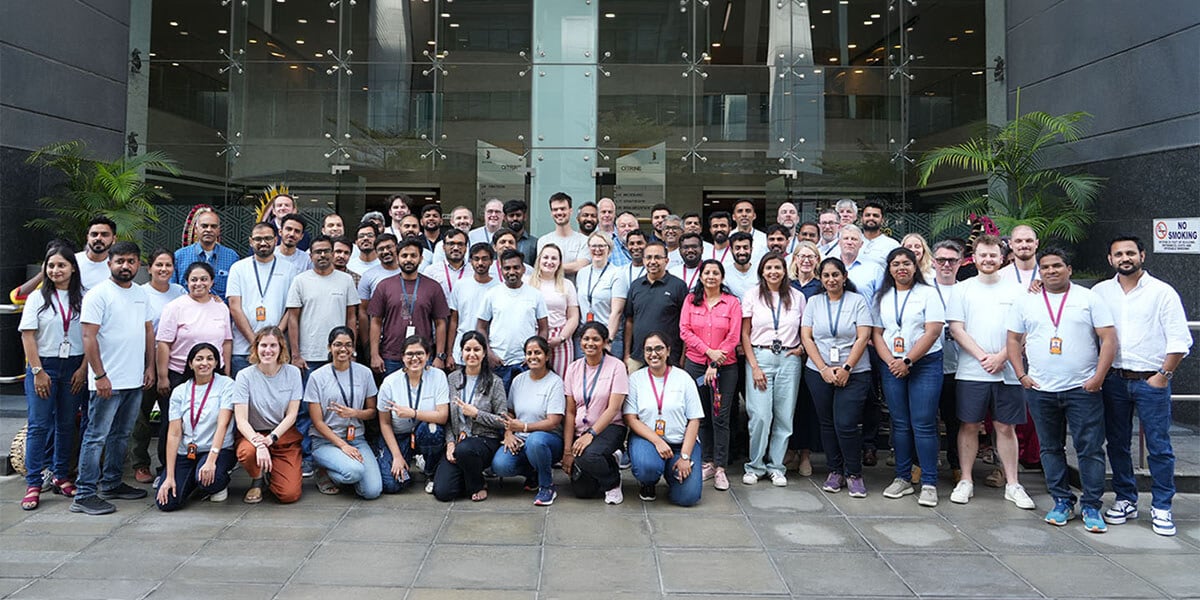
Graphcore’s new AI Engineering Campus in Bengaluru marks a significant investment in the future of AI computing and in the engineers who will build it. As a wholly owned subsidiary of SoftBank Group, Graphcore is scaling its end-to-end system capabilities to help shape the next generation of compute for artificial intelligence.
For engineers joining – it's a considered move.
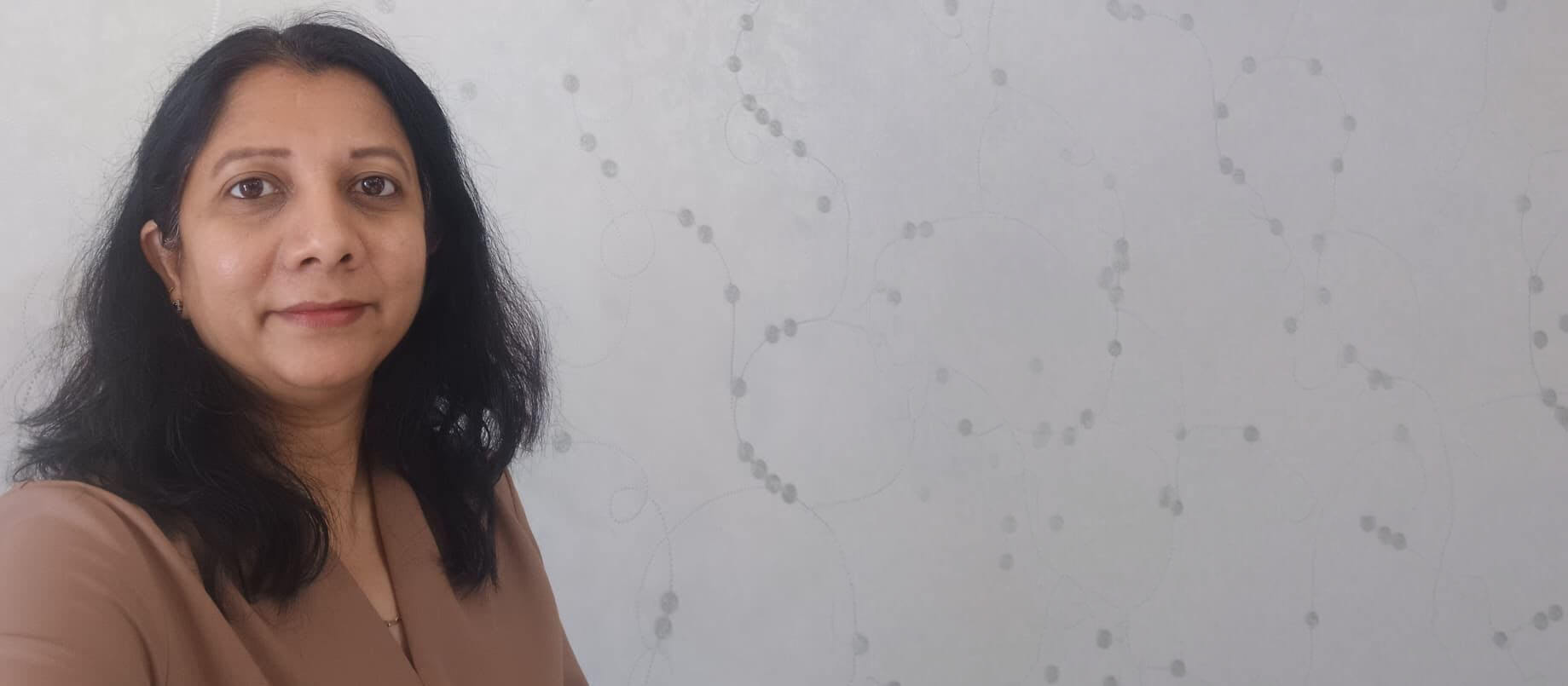
We spoke to one of our first cohort of engineers in Bengaluru, Nalina, about making a deliberate move into deeper system-scale engineering. She talks about what she’d outgrown, what she learned in the interview process, and why building across teams and partners is the challenge she most wanted next.
What confirmed that joining Graphcore was the right decision for me?
What persuaded me that joining Graphcore was the right decision was meeting my manager, Mark, face to face. He walked me through previous projects and explained, in real terms, what they had built. He explained systems operating at a completely different physical scale to anything I had worked on before.
All my career I’ve worked on embedded consumer devices – Echo devices, Intel laptops. Small devices with compact systems. Here was something that still used my semiconductor background but applied it at a very different scale.
I realised I didn’t want to spend my entire career working on smaller versions of the same thing. This felt like a step sideways and forward at the same time. Familiar foundation but with new complexity.
That’s why I chose to take the role.
What kind of work did you realise you'd outgrown before joining?
I wasn’t desperately looking for a change, but I had started asking myself some uncomfortable questions.
In my previous role, I was moving from one version of a product to the next. It wasn’t bad work, but it was becoming repetitive. One device to the next generation of device. The same patterns just refined.
I started mapping out my future there and realised the learning curve was flattening. I wasn’t adding something fundamentally new to my skill set.
I’ve always believed that if you’re an engineer, you should keep learning. If the work becomes predictable, you have to ask yourself whether you’re still growing. That’s when I decided I needed something different - not a complete departure, but a stretch.
Graphcore felt like that stretch.
What does doing 'serious engineering' mean to you now, compared to before?
For me, serious engineering has always meant building something real. I’ve spent 19 years in electronics. I need to see what I’m building: a board that boots, Silicon that runs, and a device in someone’s hands. That’s what engineering means to me.
Serious engineering also means staying relevant. You can’t ignore where the market is going. You can’t say, “This is what I do,” and refuse to adapt. That’s how companies disappear.
AI isn’t optional anymore. It’s where the industry is moving. So for me, serious engineering today means applying your fundamentals - electronics, semiconductor knowledge - to the new wave of technology.
At Graphcore, I’m still grounded in hardware and semiconductor engineering but I’m applying it to something that’s clearly at the cutting edge. It feels like the next level of the same journey.
What stood out to you during the interview process that helped you decide this was the right place?
There were moments of confusion as you can’t see everything. You can’t ask every question and get a detailed answer as what Graphcore is building is very much under wraps. There were two things that really helped me.
First, the job description itself connected three important dots for me:
- Semiconductor experience (which I already had)
- AI (which I wanted to move toward)
- Racks and blades (which were completely new to me)
I’ve joined a non-public project before in my previous company. I knew that if something is held closely, there is usually a reason. It often means the work is significant. The clarity and depth in that in-person discussion gave me confidence that this wasn’t hype. There was real engineering underneath and that’s what convinced me.
In your first few weeks, what's been the strongest signal that you made the right choice?
Quite simply, it was transparency. Once you’re inside the system, you need clarity on what you’re building and why. In my first weeks, I met team members across Bengaluru and the UK and I went through the roadmap. I understood the milestones and I could see how the pieces are connected.
That removed the last 1% of doubt. When you see the roadmap and understand how you fit into it, it starts feeling like ownership.
The openness in sharing that information internally built trust very quickly for me.
What kind of complexity are you most energised to help make tractable here?
The technical challenge is exciting, of course, but the complexity I’m most aware of is at the interfaces. This project involves external partners and it’s the first time we’re working together in this configuration. That adds a different kind of challenge.
It’s not just about engineering the system. It’s about engineering the relationships: building trust, being patient, and understanding that this is new for them as well. Making sure everyone feels we are working toward one shared product, not separate agendas.
Approaching with ownership principle will help faster alignment. This will earn trust. If we get that right - the collaboration across companies, cultures and teams - the technical success will follow. That’s the complexity I’m most energised to work through.
We’re continuing to grow our engineering teams in Bengaluru. If you’re ready to stretch your fundamentals into AI systems at scale and work on engineering you can see, test and ship, explore our current opportunities.