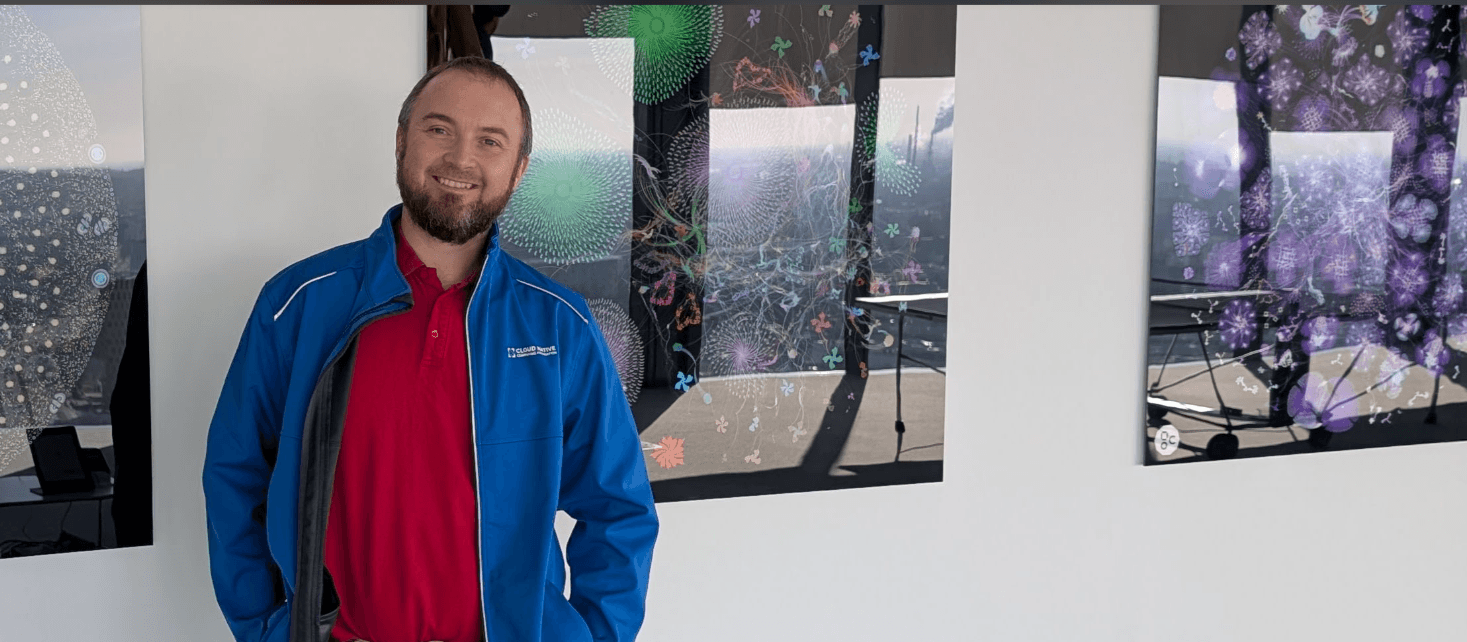
Graphcore’s growing engineering presence in Gdańsk reflects a deliberate investment in building world-class AI systems in one of Europe’s most competitive technical ecosystems. As a wholly owned subsidiary of SoftBank, Graphcore is scaling its end-to-end system capabilities to help shape the next generation of Artificial Intelligence.
For Lukasz, Principal Cloud Software Engineer in Gdańsk, that decision wasn’t about titles or a clean, linear career path. It came from a habit of stepping into gaps, asking how things really work, and being willing to learn under pressure.
Progress without a blueprint
I always thought of myself as someone going from the shoeshine to something bigger. I started out as a lab technician. I’m a physicist by education – not computer science.
Before moving into engineering, I co-owned a pub with friends. When that chapter ended, I made a practical decision: use my background in electronics and curiosity about computing to try something new.
That “something new” turned into a series of roles where I kept stepping into whatever was needed next. I became an engineer, then I was filling gaps in different roles – sometimes even leading areas I wasn’t really supposed to be leading. Not because I was ready, but because there was nobody else to do it!
From validation to DevOps, infrastructure automation to platform work, the pattern stayed the same: take responsibility first, then figure it out properly. That mindset eventually led me to Kubernetes.
Finding the layer beneath
My move into Kubernetes wasn’t driven by trends or titles – it started with curiosity. There was one person in our team building a multi-cluster, multi-tenant environment. Everything looked… easy. Click, deploy, it works. I wanted to understand how.
Then this person left and I thought maybe I can fill those shoes.
I don’t have the formal background, so I always ask: how does it really work? If I don’t understand – I need to go deeper. That instinct shaped my role over time, not just running Kubernetes but connecting it to the layers most people don’t look at.
I put myself between the orchestration layer and the hardware. Kubernetes lets you submit workloads and forget what’s underneath, but I didn’t want to forget. At Graphcore, that mindset matters because we’re a hardware company. You can’t ignore what’s going on underneath. That’s actually the interesting part.
Learning without the “right” path
I didn’t take the regular path. I didn’t start with the full picture or fundamentals. I learned what I needed for the role, and only that. Then, over time, that created gaps and I wasn’t even sure what I was missing. So I thought maybe the certifications would help me fill that.
That’s what led me to the Kubernetes certification track – including the Certified Kubernetes Security Specialist (CKS), one of the more demanding exams. It wasn’t because I wanted the recognition – I’m not interested in titles or badges on LinkedIn. For me, it is about building a more complete understanding of the system and delivering a product you can rely on.
Chaos, pressure, and persistence
There was no perfect study plan, it was chaos, I wish I had a better outline of my plan – but life happens. The timeline overlapped with major life changes, including the birth of my child. Every free moment was like: okay, maybe I can read something, maybe I can do a course. No structure. Just trying to catch time.
Even the logistics were complicated. I couldn’t take the exam at home there were too many restrictions. I had to go into the office after hours, and Graphcore really supported that. They provided the flexibility and the financial support to enable me to do the course.
The hardest part was the CKS exam. It was completely new territory for me. And the time pressure is intense. If you’re not fluent, you struggle and I failed at the first attempt.
Then I nearly failed at the second attempt. It was bizarre. I read the same question twice and still didn’t understand what they wanted. At that point, I was ready to stop, but I passed with 72% - I made it.
Applying it where it matters
We hadn’t gone particularly deep on security before – CKS changed that. Many of those areas, we started to incorporate into our development process.
Now I work in an architectural role, I draw on that broader understanding regularly. I use that knowledge when making decisions – about APIs, tooling, where the ecosystem is going.
Still learning, still unfinished
I’m currently working towards the “Golden Kubestronaut” track, it’s a much larger set of certifications, many in areas I haven’t worked in directly. That will be challenging, I know the terms, but I don’t have practical experience.
It will probably be the same story as before. Chaos, time pressure… now with two kids instead of one.
I like to understand things properly – inside out, even if that’s not always fully achievable. I struggle with that sometimes. You want to go deeper, but you can’t always. This gives me a reason to go deeper with intent.
My advice for anyone considering being a Kubestronaut
I would be better prepared, have a plan, and know you’ll need time and space to do it. However, be prepared for that plan to change, because life happens and you need to be adaptable. Although… I should probably follow that advice myself.
We’re continuing to grow our engineering teams in Gdańsk, working across the boundary between infrastructure, software, and hardware. If you’re the kind of person who wants to understand how things really work – take a look at our current opportunities.